Aztec Empire Dynamics
The Aztec Empire spanned an area of 85,000 square miles and had a population of around 6 million people. How did the Empire grow to such a size? Why were so many city states unhappy with it? How did Cortés exploit this? This section will explore the political landscape of the Aztec Empire and how Cortés managed to topple it.
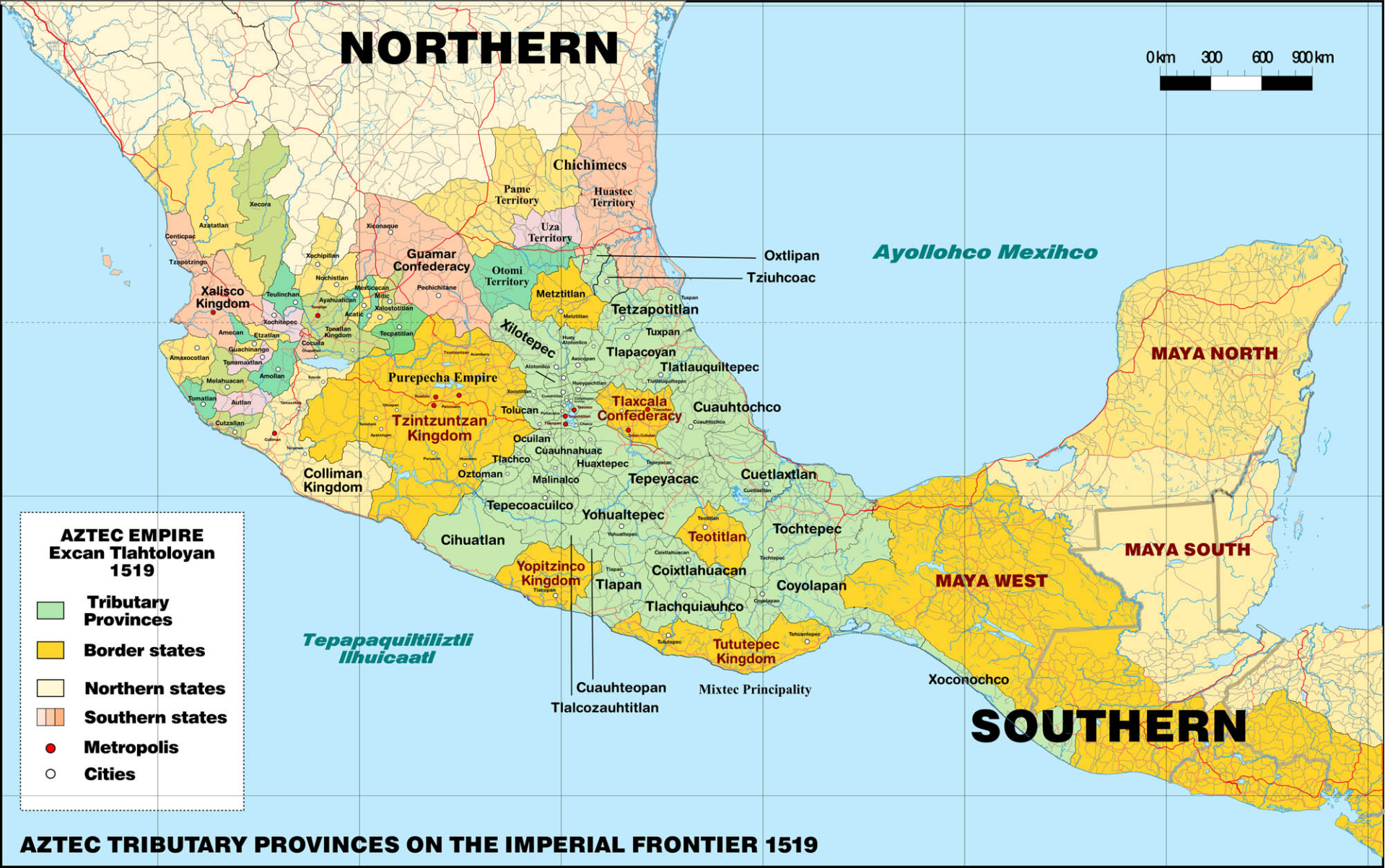
How was the Aztec Empire so powerful?
The Aztec Empire, also known as the Triple Alliance, was a conglomeration of three main city states: Tenochtitlan, Tetzcoco and Tlacopan. Located in the Valley of Mexico, the three main city states were built around and on top of Lake Texcoco, which modern day Mexico City is built upon. Tenochtitlan served as the capital of the Empire and it demanded tributes of food, gold and slaves from the other city states that it occupied. The Empire had trade routes throughout Mexico down through modern day Guatemala, which allowed the Aztecs to amass vast amounts of wealth. The stories of the wealth of the Aztec Empire would inspire Cortés to begin his conquest and ultimately the end of the empire itself.
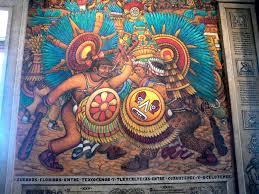
Why was there growing discontent in the Empire?
Despite its immense power and strength, the Aztec Empire did not control the entire region and had many enemies.Their main opponent was the Tlaxcalans, who were upset by the economic isolation of their region by the Aztecs and fought many “flower wars” against them. These wars were mainly fought in order to obtain slaves and sacrifices and were not fought to gain land. The Tlaxcalans would become the conquistadors main allies in their battles against the Aztecs and supplied thousands of soldiers. When Cortés and his expedition travelled towards Tenochtitlan they were repeatedly told of the cruelty of the Aztecs by many city states and towns that they travelled through. This would lead to many indigenous allies joining the conquest.
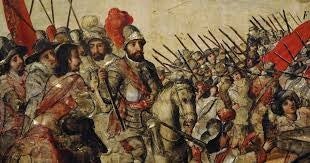
How did Cortes use indigenous allies?
During the journey towards Tenochtitlan, Cortés and his men stopped in many towns and cities where they gathered thousands of warriors to march with him through promises of liberty from the Aztec Empire. As previously mentioned, the Tlaxcalans were the main allies of the conquistadors but many other tribes joined them such as Tetzcoco, Otomí, Chalco, Mixquic, Huetjozingo and Itzapalapa. The warriors of these tribes made up the main fighting force of army and Cortés' without the soldiers provided to him by these native allies, it is evident that Cortés and his men would not have been as successful as they were, as they would have been greatly outnumbered without them.
Create Your Own Website With Webador