Cortés and his strategies
Despite having little military experience, Cortés was able to overcome the biggest empire in the continent at the time. The life and exploits of this conquistador have been written about for centuries. In this section we will explore how Cortés went from a nobleman in a poor region of Spain to the first Governor of New Spain, as well as how he achieved his great feats.
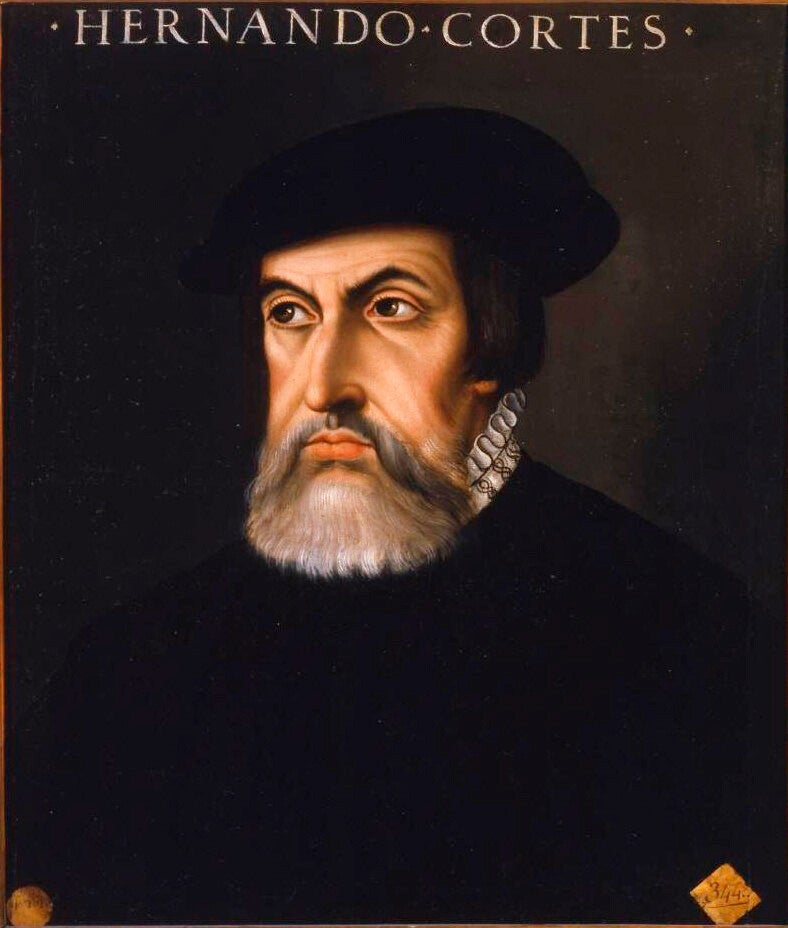
Who was Hernán Cortés?
Hernán Cortés was born around 1485 in the town of Medellín, Extremedura, Spain. Born into a noble family, he spent two years in Salamanca studying law before leaving for Hispaniola in 1504, where he was granted an encomienda, a plot of land where native people worked for the benefit of the Spanish master. In 1511, he travelled to Cuba with Diego Velázquez de Cuéllar in order to colonise the land. Cortés was rewarded with a position of power under Velázquez, who later put Cortés in command of an expedition to discover new land and riches in Mexico. However, their relationship grew weary and Velázquez no longer trusted Cortés, cancelling the expedition. Cortés quickly gathered ships and men and set sail on his expedition without permission and was technically a mutineer. Cortés knew that he could not return empty-handed or face severe punishment, which would drive him to his conquest of the Aztec Empire.
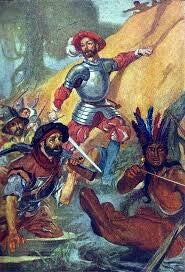
How did he remain in control of his expedition?
When Cortés and his expedition landed on the shores of Mexico in Veracruz, he scuttled his ships in order to prevent his men fleeing and secured their loyalty to him and his goal. In addition to this, they established the town of Villa Rica de la Vera Cruz, where Cortés declared the town as now under the jurisdiction of King Charles V. Cortés formally resigned as leader of the original expedition and was elected as Justicia Mayor (Chief Justice) and Captain-General of the town. This was to give legitimacy to his new expedition of exploring the interior of Mexico and break away from the authority of the Governor of Cuba, Diego Velázquez de Cuéllar. Furthermore, Cortés was a skilled orator and would promise his men great rewards if they were to follow him in his expedition, which was incredibly effective. He also dealt with potential mutineers with extreme prejudice, such as when he discovered a plot to take a ship back to Cuba and inform on Cortés’ actions. Two conspirators, Pedro Escudero and Juan Cermeño were hanged for this as well as many others receiving punishments of flogging and having their feet cut off. This example of brutality to possible mutiny and disobedience demonstrated to the men under Cortés that he was serious about his expedition and would not tolerate such behaviour. Later on, once the expedition arrived in Tenochtitlan, Cortés would kidnap Moctezuma II and place him under house arrest. He used the Aztec ruler as a puppet in order to keep the population of the city under control. While this worked briefly, when Cortés to leave the city in order to repel an attack sent by Diego Velázquez de Cuéllar, the conquistador Pedro de Alvarado was left in charge and led a massacre against the Aztec nobles. Once Cortés returned, the city was up in arms against the Spanish which caused them to flee. Despite this, Cortés would not give up his conquest and led his men back to victory at the Battle of Otumba and also the Siege of Tenochtitlan.
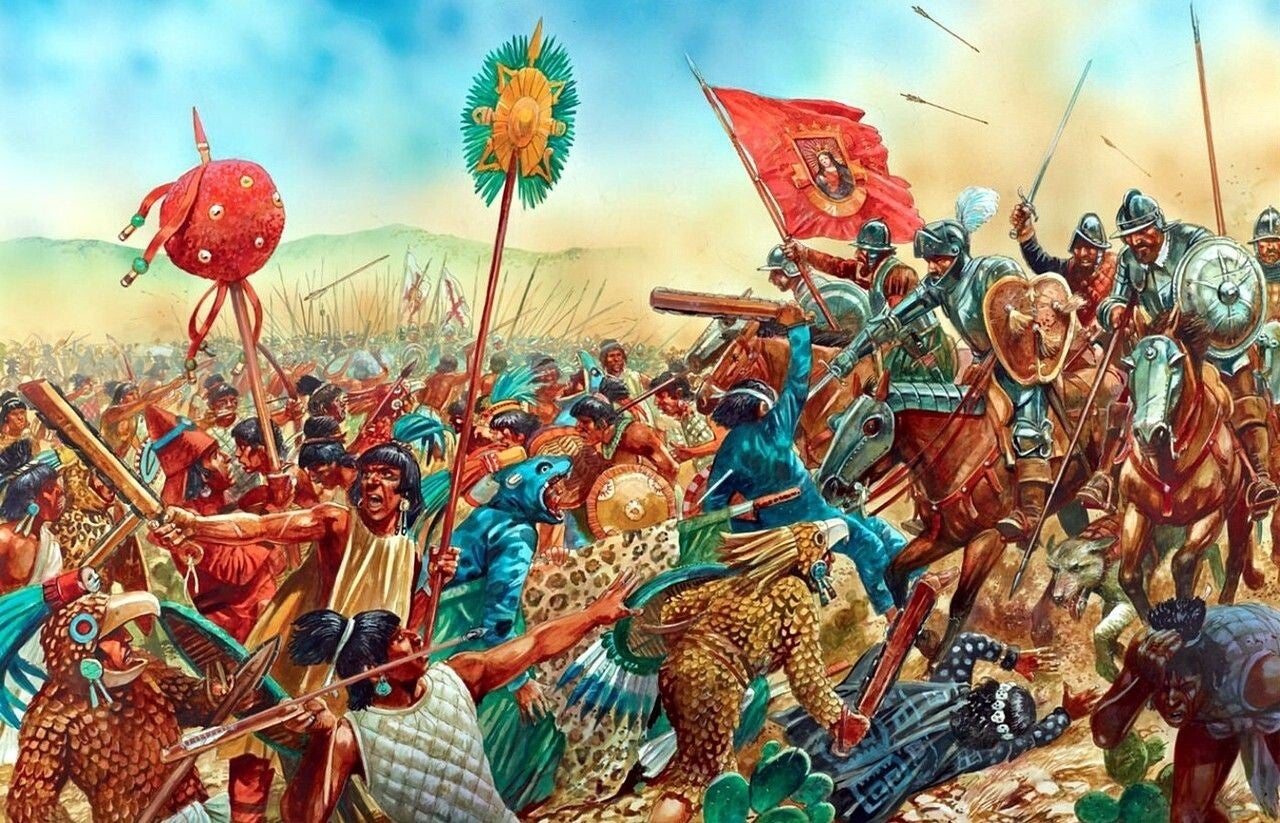
What tactics did he use in battle?
Cortés did not have much previous military experience yet he was incredibly successful in his battles against the native peoples. His use of Spanish steel and armour, as well as horses, crossbows, arquebuses and cannons gave him a great advantage against the people he fought. The indigenous people had never seen horses before and Cortés used this shock value efficiently, such as at the Battle of Otumba, where he led a charge that killed most of the Aztec generals of the battle and caused their defeat to the conquistadors. The psychological impact of the Spanish weaponry gave Cortés a much needed advantage in these battles as during his first skirmishes they were greatly outnumbered. In addition to this, the use of indigenous allies was essential to Cortés’ success. His alliance with the Tlaxcala as well as many other tribes helped even the odds when Cortés faced the Aztecs in the Siege of Tenochitlan and many other battles.
Create Your Own Website With Webador